2026-10-24 ·
Common Causes of Roof Leaks During South Florida Rainy Season
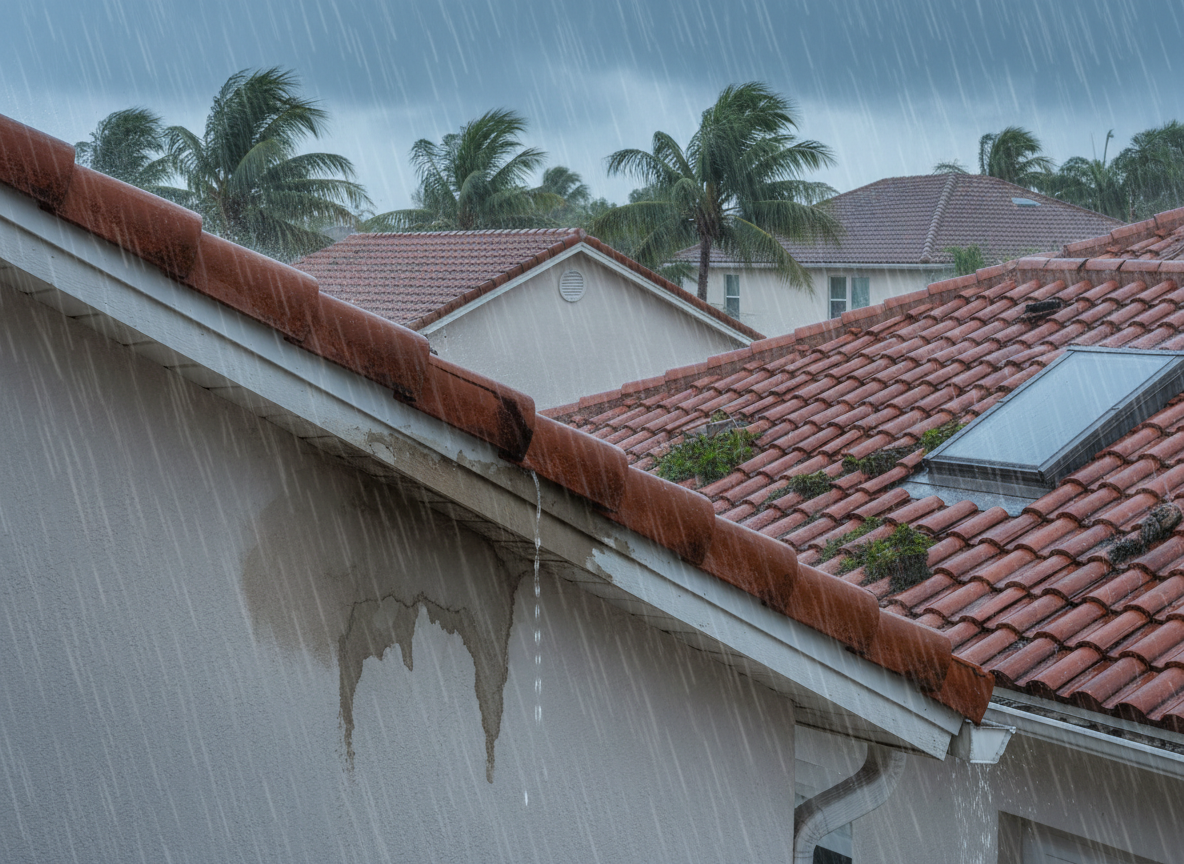
South Florida rainy season leaks most often trace to degraded flashing around penetrations, water backup from clogged gutters, and wind-driven rain forcing under aged tile or shingle edges on homes built between the 1960s and 1980s.
Flashing Failures Around Vents and Chimneys
In Cutler Bay neighborhoods such as Lakes by the Bay and Whispering Pines, many roofs feature concrete tile over older underlayment that has dried and cracked after 15–20 years. Step flashing and counter flashing at plumbing vents, chimneys, and skylights lose their seal when repeated 3–5 inch downpours hit followed by 90-degree heat. Once the sealant shrinks, water travels under the tiles and pools on the decking. Homeowners notice brown stains on ceilings near bathrooms first. Regular roof inspection services catch these spots before they turn into interior repairs. Miami-Dade wind codes now require upgraded flashing details on replacements, which explains why older homes leak sooner during afternoon thunderstorms.
Clogged Gutters and Overflow at Valleys
Heavy May-through-October rains drop 6–8 inches in a single afternoon across Princeton and Goulds. When leaves, pine needles, and roof granules collect in gutters, water backs up under the first course of shingles or tiles at the eaves. Valleys collect even more debris because two roof planes funnel flow into one narrow channel. On 1,800–2,400 square foot ranch homes common in the area, this overflow soaks the fascia and sheathing within hours. The resulting rot spreads inward and shows up as soft spots on the ceiling above the garage or master bedroom. Clearing gutters before the season and scheduling a leaky roof fix at the first sign of interior moisture keeps small issues from becoming deck replacement jobs.
Wind-Driven Rain Under Lifting Shingles and Tiles
Tropical storm gusts push water sideways under lifted edges on asphalt shingle and tile roofs throughout Palmetto Bay and South Miami Heights. Homes with 8–12 year old shingles often have lost granule coverage, allowing wind to curl the tabs. Concrete tiles crack from foot traffic or prior storms and then shift, creating gaps that 40 mph gusts exploit. Water travels laterally along the underlayment until it finds a nail hole or seam. After multiple events the felt tears, and leaks appear weeks later when homeowners least expect them. Checking for lifted or cracked material after every named storm prevents surprise interior damage.
Degraded Sealant at Skylights and Solar Penetrations
Many Cutler Bay roofs installed in the 1990s now carry skylights or early solar arrays secured with butyl tape that has dried and separated. Rainy season wind loads flex the frames, reopening seams that once measured 1/16 inch. Water follows the rafters and drips onto insulation above hallways or living rooms. Because these penetrations sit on the lower third of the roof slope, even moderate rain volumes create steady drips. A targeted roof repair at the sealant joints restores the barrier without full replacement. Linking this work to a full roof inspection services visit reveals whether the underlayment beneath has also deteriorated.
Homeowners in the Cutler Bay area who notice ceiling stains or musty odors during the rainy season benefit from prompt evaluation. Leaky roof fix crews familiar with Miami-Dade wind-driven rain patterns can isolate the entry point without unnecessary demolition. Pairing that visit with the guidance in What to Look for When Inspecting Roof Damage After a Storm helps residents document conditions before the next system arrives.