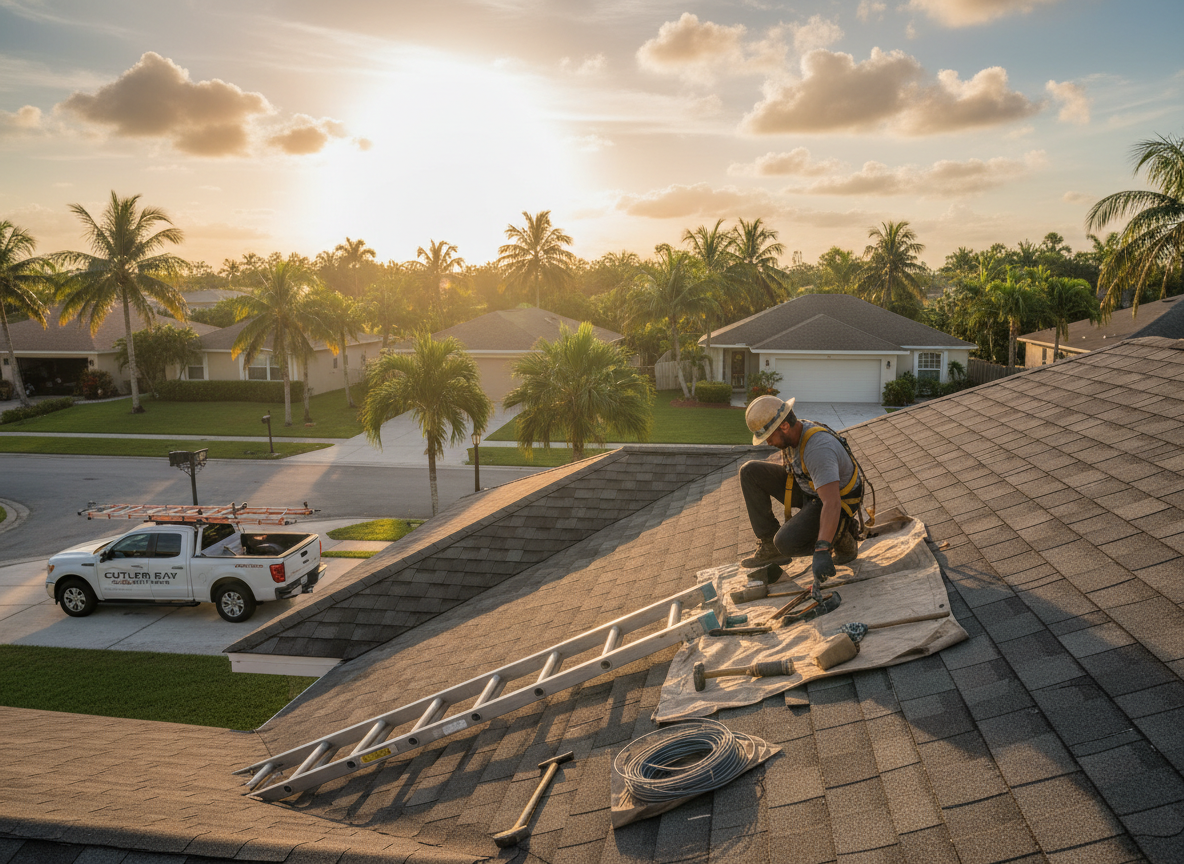
Cutler Bay roofs take constant punishment from afternoon thunderstorms and salt-laden air blowing in from Biscayne Bay. Barrel tile and asphalt shingle systems on homes built from the 1970s onward often develop cracked tiles, rusted flashing, and separated underlayment long before homeowners notice interior stains. Repair crews must match existing materials exactly; swapping a single cracked Spanish tile with the wrong profile creates new leak paths at the next downpour. Proper underlayment inspection and replacement of deteriorated felt or synthetic layers prevents water from migrating under the remaining roof during the six-month wet season.
Edge cases appear regularly on streets like SW 184th and Old Cutler Road where tree canopy and poor attic ventilation trap moisture against decking. Removing only the obvious damaged section without checking for rot in the sheathing leads to callbacks within weeks. Miami-Dade wind-borne debris rules also require any repaired section to maintain the home’s existing impact rating, so crews carry matching impact-rated tiles and sealants on every truck. Skipping these steps voids insurance coverage when the next tropical system arrives.
Homeowners frequently attempt DIY sealant fixes that trap moisture and accelerate deck decay. A thorough repair starts with moisture mapping from the attic, followed by targeted removal of failed components rather than blanket coatings. This approach keeps the job smaller and preserves the remaining service life of the roof while meeting current Florida Building Code wind-load requirements for the Cutler Bay zip codes.
Technician insight
In Cutler Bay the thing that catches most people out with roof repair is hidden rot under the tiles along the south-facing slopes where afternoon sun and salt air combine. Homeowners see one cracked barrel tile and think a quick patch will do, but once we pull the course we usually find the felt has turned to dust and the deck is soft for several feet on either side.
Storm-driven leak on SW 200th Terrace
Homeowner noticed water stains after a June thunderstorm. Inspection revealed lifted flashing at a valley where two roof planes met on a 1980s tile roof. We replaced the corroded step flashing, installed new synthetic underlayment in the affected course, and reset matching tiles. No further leaks appeared during the rest of hurricane season.
How it works
- 1
On-site assessment
Technician climbs and inspects from the attic and roof surface, documenting cracked tiles, flashing gaps, and moisture stains while noting tree overhang or ventilation issues typical in Cutler Bay neighborhoods.
- 2
Material matching
Existing tile profile, shingle color, and underlayment type are recorded so replacement pieces blend with the remaining roof and satisfy Miami-Dade impact standards.
- 3
Targeted removal and repair
Failed sections are cut out, rotted decking replaced, new underlayment installed, and matching tiles or shingles set with proper fastening to restore water shedding.
- 4
Final leak test and cleanup
Hose test confirms no active leaks; debris is removed from gutters and yard before departure.
Pricing
Upfront quotes after inspection; final price depends on extent of deck damage, material match difficulty, and access constraints common on Cutler Bay lots.