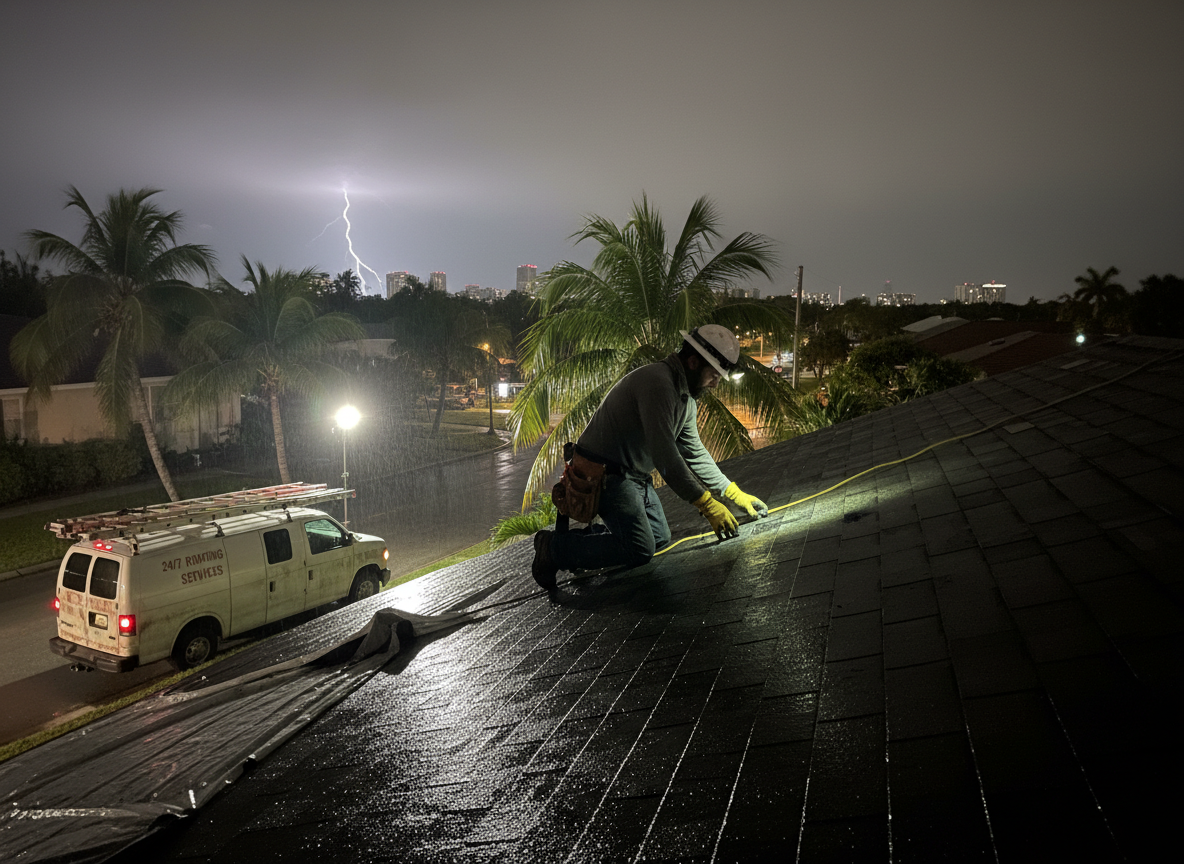
Cutler Bay homes, many built between the 1950s and 1980s in neighborhoods like Cutler Ridge and Bel Aire, often carry asphalt shingle or concrete tile roofs that have already seen multiple hurricane seasons. When an afternoon thunderstorm opens a leak near a valley or plumbing vent, water can travel under the underlayment and reach the deck within hours because of the high humidity and frequent wind-driven rain. A 24/7 roofing service call starts with a rapid site visit to locate the active breach, install temporary ridge tarps or peel-and-stick membrane patches rated for Miami-Dade wind loads, and document the damage for insurance. Crews keep emergency stock of color-matched tiles and self-adhered underlayment on the truck so the immediate water intrusion stops before interior ceilings are ruined.
Miami-Dade County requires any roof repair that exceeds 25 percent of the surface to meet current high-velocity hurricane zone fastening schedules. On a 24/7 call this means the technician must decide on the spot whether a spot repair will hold until the next business day or whether the entire slope needs temporary tie-downs to prevent uplift during the next front. Older homes in the area frequently have two layers already, so crews check rafter spacing and existing nail patterns before adding weight. Leaving a roof open overnight is avoided; instead, the team uses reinforced poly sheeting secured with furring strips and masonry anchors into the fascia to survive overnight gusts common along South Dixie Highway corridors.
Tile roofs common in Cutler Bay developments lose individual pieces to wind or foot traffic during repairs, and locating matching barrel tiles from the original manufacturer batch can take days. The 24/7 protocol includes photographing the existing tile profile and color, then installing a temporary ridge vent cover or foam closure until permanent tiles arrive. Crews also inspect for cracked ridge mortar, a frequent failure point after decades of thermal cycling, and note any soffit or fascia rot discovered while accessing the roof edge at night with portable lighting.
Technician insight
In Cutler Bay the thing that catches most people out with 24/7 roofing service is the speed at which water travels under the second layer on 1970s shingle roofs once the underlayment splits near the valleys; by the time homeowners notice ceiling spots the deck is already soft along the entire rafter run.
Nighttime Leak During Summer Storm
Homeowner in Cutler Ridge called after water appeared above a bedroom window during a late thunderstorm. Inspection found a lifted shingle at a plumbing vent with failed sealant. Crew installed a self-adhered patch and ridge tarp secured to code. Water stopped, interior was protected, and permanent vent boot replacement was completed the next dry day.
How it works
- 1
Emergency Call Intake
Homeowner describes active leak location and time of discovery; address confirmed as within Cutler Bay service range.
- 2
Rapid Site Assessment
Technician arrives, climbs safely, identifies breach, and determines if temporary membrane or full tarp is required for overnight protection.
- 3
Immediate Water Stoppage
Peel-and-stick underlayment or ridge tarp installed and secured to Miami-Dade wind standards; interior access points checked for moisture.
- 4
Documentation and Follow-Up
Photos and written report provided; permanent repair scheduled once weather window and materials are confirmed.
Pricing
Upfront quote provided after the initial inspection; emergency after-hours mobilization fee applies.