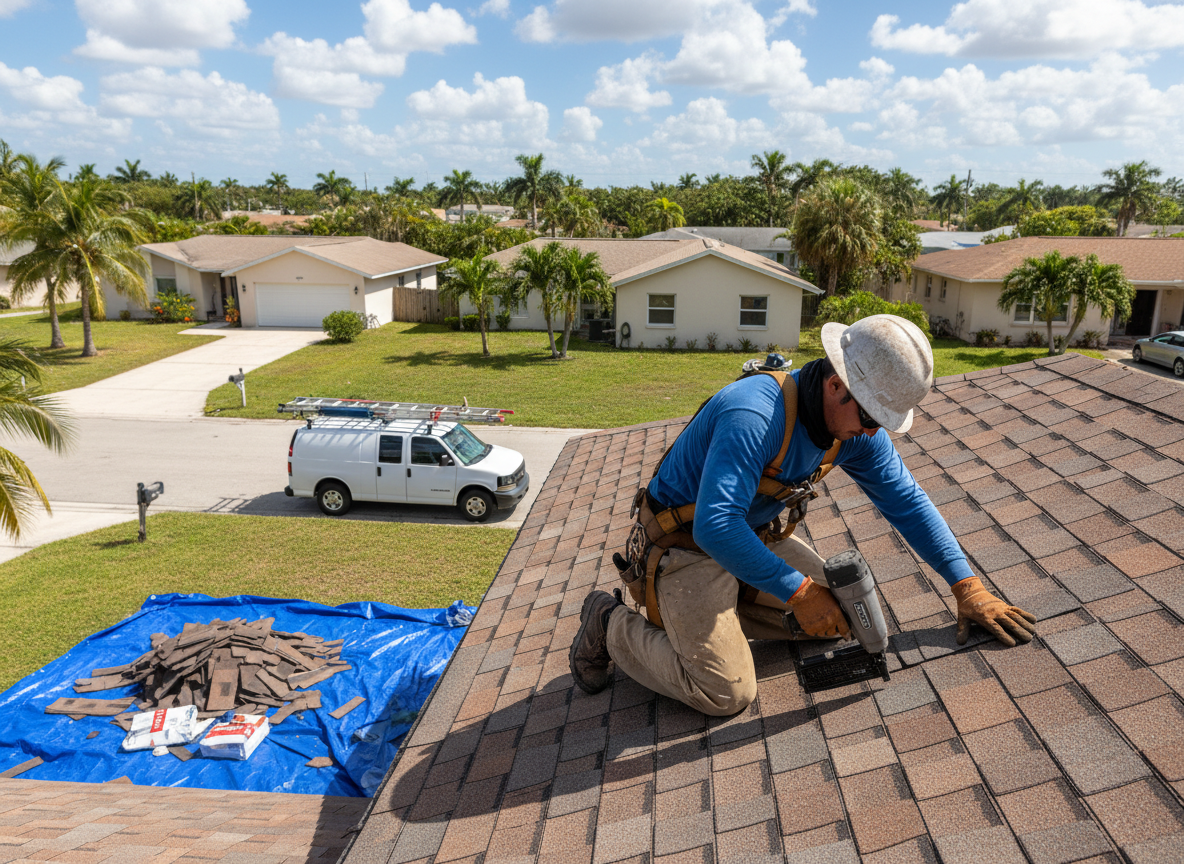
Cutler Bay homes, many built from the 1960s through 1990s in neighborhoods like Cutler Ridge and Bel Aire, often carry asphalt shingle or concrete tile roofs that have endured decades of Florida sun, salt air, and sudden downpours. Affordable roofing here means selecting materials that meet current Miami-Dade wind-load requirements without overspending on unnecessary upgrades. Homeowners frequently discover that skipping proper underlayment or edge flashing during earlier work leads to leaks once the rainy season arrives, turning a modest job into a full deck replacement.
Terrain and drainage play a direct role in every Cutler Bay roof project. Low-lying lots near Old Cutler Road collect standing water after storms, accelerating wear at valleys and around plumbing vents. An experienced crew checks soffit ventilation and ensures new shingles or tiles tie into existing flashing at chimneys and skylights rather than relying on sealant alone. This approach keeps costs down while addressing the real failure points common in the area's older stock.
Code compliance matters even on budget jobs. Miami-Dade requires specific fastening schedules and impact-rated products in certain zones. Choosing the right underlayment and ridge vent system upfront prevents callbacks when the next tropical system moves through. ApexMenders works from the address at 19650 S Dixie Hwy and stays available 24/7 so homeowners can address active leaks before they reach ceilings and insulation.
Technician insight
In Cutler Bay, the thing that catches most people out with affordable roofing is how quickly the rainy season finds missed flashing details on older tile roofs near the canal areas. Homeowners often focus only on the visible shingles and skip checking the underlayment tie-in at the eaves, so water works its way under the new layer within the first heavy storm.
Tile Repair After Heavy Rain
A Cutler Bay homeowner noticed water stains along a bedroom ceiling following several days of steady rain. Inspection revealed lifted tiles and deteriorated felt along the north valley where runoff from an adjacent addition concentrated. The crew replaced the underlayment section, reset matching tiles with proper clips, and added new step flashing at the wall intersection. No further leaks appeared after the next storm cycle.
How it works
- 1
Site Inspection
Walk the roof and attic to document current condition, ventilation, and any prior repairs visible from Cutler Bay streets.
- 2
Scope And Material Review
Discuss shingle or tile options that satisfy local wind requirements while fitting the home's existing structure and budget.
- 3
Preparation And Tear-Off
Remove damaged layers, replace rotten decking, and install new underlayment and drip edge before new roofing begins.
- 4
Installation And Final Walk
Apply chosen materials with correct nailing patterns, seal all penetrations, then review finished work from the ground and attic.
Pricing
Cost depends on roof size, existing layers, and chosen materials; upfront quotes provided after inspection.