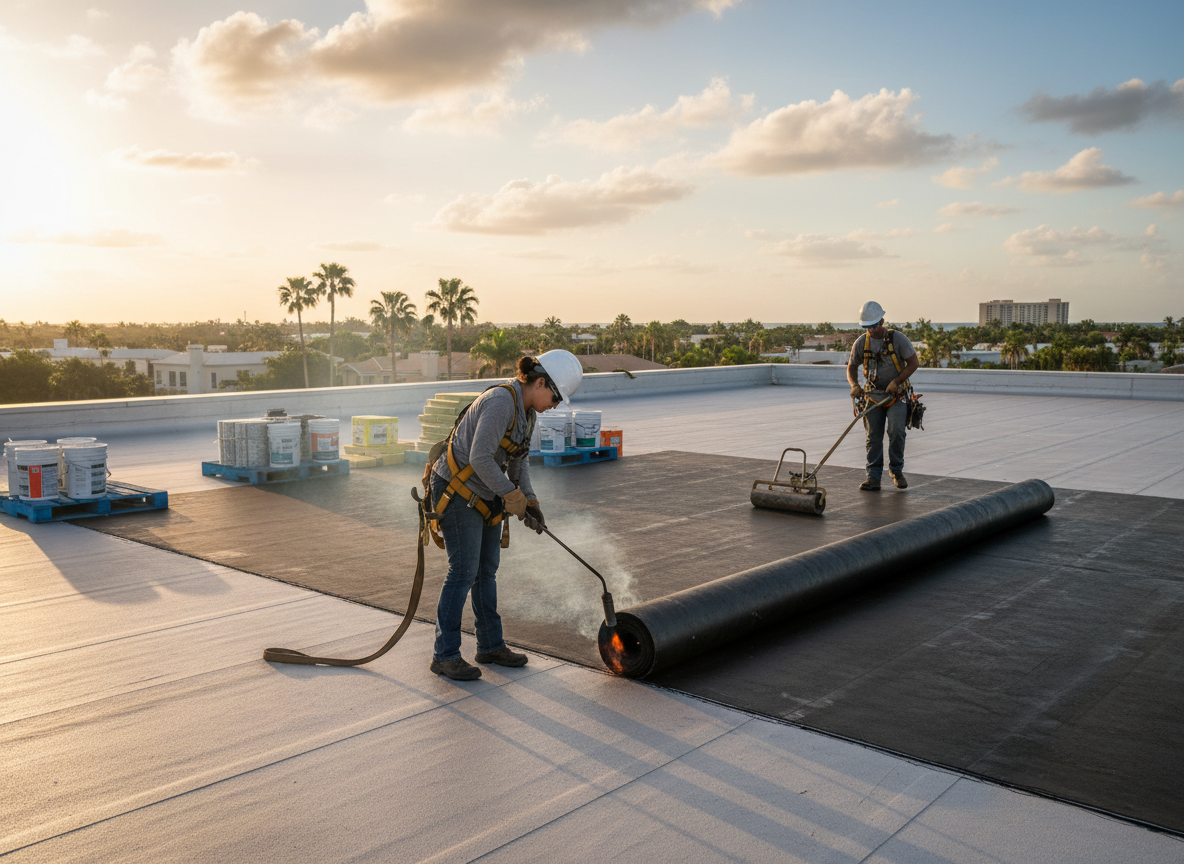
Cutler Bay commercial buildings often feature low-slope roofs on strip centers and offices along South Dixie Highway. These surfaces face constant UV exposure, salt-laden air from Biscayne Bay, and sudden wind gusts during hurricane season. Standard asphalt shingles fail quickly here, so owners turn to reinforced TPO or EPDM membranes that resist heat aging and provide better seam integrity under Miami-Dade wind-load requirements. Proper tapered insulation and cricket placement prevent ponding that accelerates membrane breakdown during the May-to-October rainy period.
Edge details matter most on these jobs. Counterflashing around HVAC curbs and parapets must be mechanically fastened and sealed with compatible mastic to handle thermal movement and driving rain. Many older Cutler Bay properties still have modified bitumen that has reached the end of its service life, showing alligatoring and blistering along seams. When replacing, crews remove wet insulation, verify deck attachment, and install new base sheets before the cap membrane to meet current Florida Building Code uplift standards.
Drainage upgrades frequently accompany membrane work. Scuppers and internal drains on Cutler Bay commercial roofs clog with leaves and sediment after storms, causing water to back up under flashings. Adding secondary overflow scuppers and cleaning existing lines reduces leak risk without full tear-off. Access logistics also differ from residential work: crews must coordinate around tenant hours and protect parking areas while staging materials at the 19650 S Dixie Hwy shop for quick response.
Technician insight
In Cutler Bay, the thing that catches most people out with Commercial Roofing is how fast ponding develops on flat roofs near South Dixie Hwy during summer downpours when drains are even slightly clogged, turning minor seam issues into widespread membrane failure within one season.
Strip Center Membrane Replacement
A Cutler Bay retail plaza reported recurring leaks around HVAC units after multiple rain events. Inspection found failed seams and saturated insulation on the existing TPO. We removed wet sections, installed new tapered insulation and reinforced membrane with upgraded curb flashings, restoring dry conditions inside the tenant spaces.
How it works
- 1
Site Assessment
Walk the roof, document existing conditions, and measure square footage plus drainage layout.
- 2
System Design
Select membrane type and insulation package that meets Miami-Dade wind and energy code for the building.
- 3
Installation
Remove wet materials, install new membrane with heat-welded seams, and tie in all penetrations.
- 4
Final Walk and Handover
Inspect seams and drains, provide maintenance guidelines, and schedule follow-up after first heavy rain.
Pricing
Upfront quotes after site visit; price driven by roof size, existing insulation condition, and chosen membrane system.