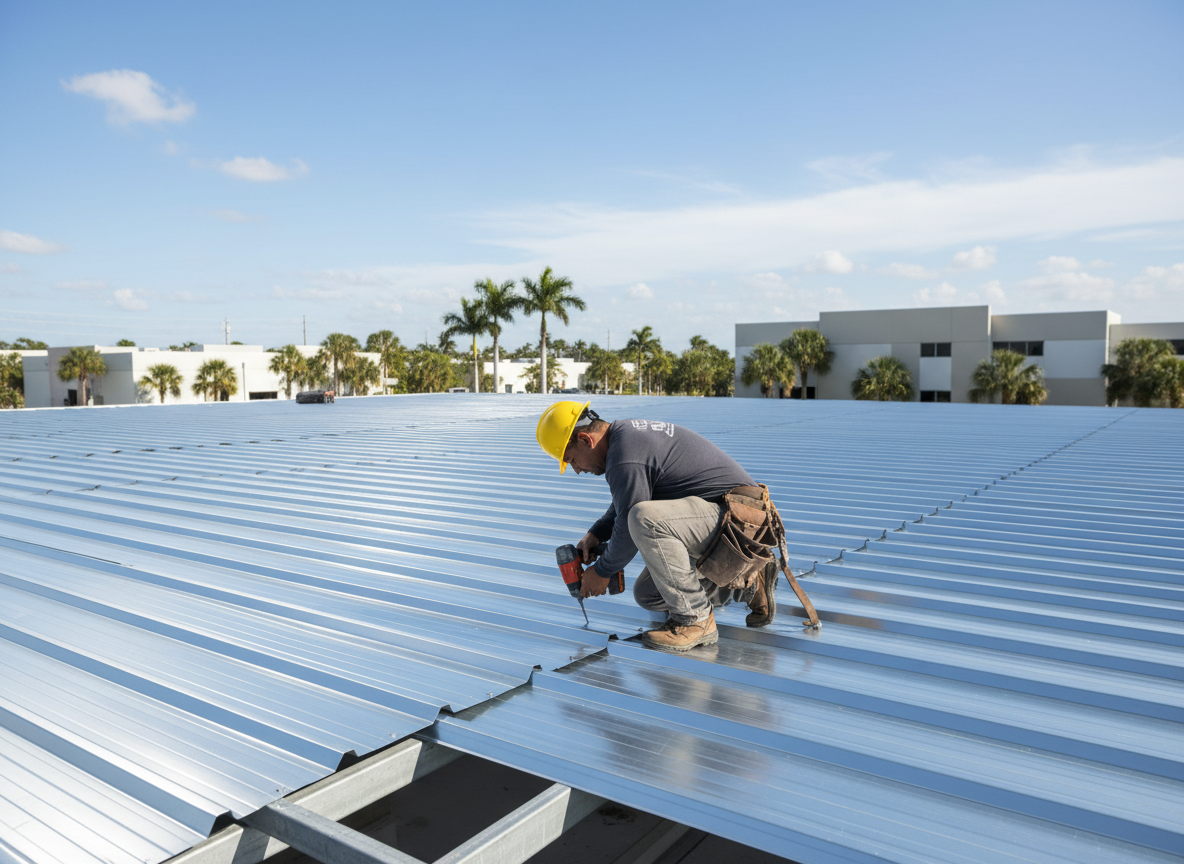
Industrial roofs in Cutler Bay face constant pressure from Miami-Dade County wind codes and the area's heavy summer rains. Flat and low-slope systems on warehouses and light manufacturing buildings need regular checks for ponding water that develops after afternoon thunderstorms. Materials must resist both UV degradation and the salt-tinged air that moves inland from the coast. Proper attachment details matter more here than in inland counties because even moderate tropical storms can create uplift on older metal decking.
Many Cutler Bay industrial sites sit on lots with limited crane access and tight setbacks next to the South Dixie corridor. That changes how crews stage materials and handle tear-off debris. We often work around active operations, scheduling lifts before dawn or on weekends to avoid disrupting tenant deliveries. Drainage modifications are common because original scuppers were not sized for the volume of rain that now falls in short bursts during hurricane season.
Edge details and flashing around HVAC curbs require extra attention on buildings constructed in the 1980s and 1990s. Those structures frequently show corrosion at the base of penetrations after years of standing moisture. We replace deteriorated insulation and install new cricket slopes rather than simply overlaying new membrane. This prevents the repeat leaks that appear months after a quick patch job.
Storm Season Preparation
Before hurricane season we inspect tie-downs and perimeter flashing on Cutler Bay industrial roofs. Small gaps at the edge can allow wind-driven rain to reach the deck, especially on buildings near the turnpike where open fields increase wind exposure.
Technician insight
In Cutler Bay the thing that catches most people out with Industrial Roofing is how fast humidity and standing water attack the underside of metal decks on buildings near the old Cutler Ridge developments. Afternoon storms dump water faster than the original scuppers can move it, and once corrosion starts under the insulation it spreads before anyone notices from the ground.
Warehouse Roof Leak After Summer Storms
A distribution building off Old Cutler Road reported water entering near loading docks after repeated afternoon rains. We found deteriorated insulation and failed flashing around roof drains. We removed the wet sections, installed new tapered insulation to improve drainage, and replaced the perimeter edge metal with a higher wind-rated profile. The owner reported no further interior leaks through the next rainy season.
How it works
- 1
Site Assessment
Walk the roof with the building manager to note drainage patterns, existing penetrations, and any active leaks reported after recent storms.
- 2
Material and Code Review
Check Miami-Dade product approvals and wind-load requirements for the specific roof height and exposure category in Cutler Bay.
- 3
Staging and Safety Setup
Position equipment along S Dixie Hwy access points while protecting tenant parking and loading zones during work hours.
- 4
Installation and Drainage Work
Install new membrane or metal panels with upgraded edge details and corrected slopes to move water away from HVAC curbs.
- 5
Final Walk and Documentation
Review all seams, flashings, and drains with the owner and provide photos for their maintenance records.
Pricing
Pricing depends on roof size, existing deck condition, and access limits common on Cutler Bay industrial parcels.