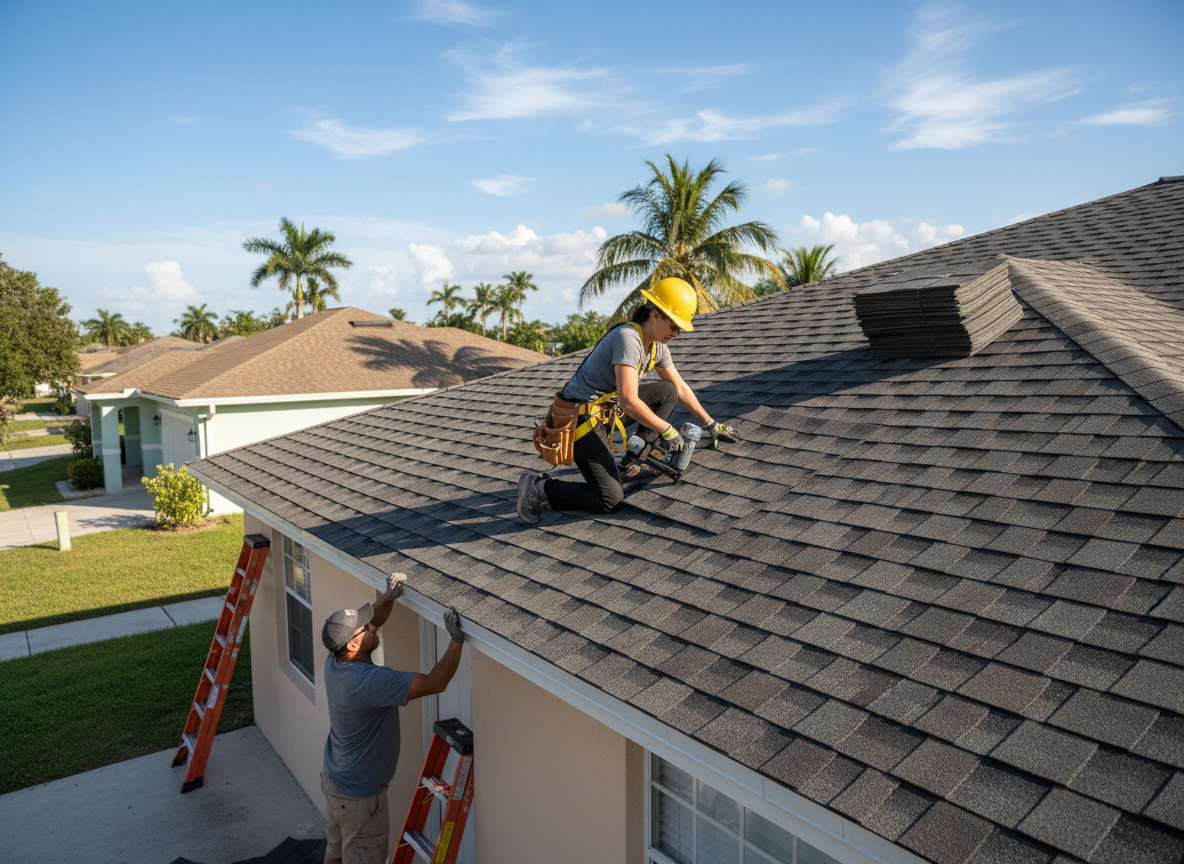
Cutler Bay homes often feature concrete tile or asphalt shingle roofs installed decades ago on concrete block construction. Miami-Dade County wind-load requirements demand specific fastening patterns and underlayment that many pre-2002 roofs lack, so a simple replacement job frequently turns into a full deck inspection and tie-down upgrade. Heavy summer rains combined with salt-laden air accelerate corrosion on metal flashings and fasteners, which is why we always replace those components rather than reuse them even when the tiles look reusable.
Professional roofing services here start with a thorough attic check for moisture stains and ventilation issues that trap humidity under the deck. We pull permits through Miami-Dade and schedule inspections before any underlayment goes down because the county requires a dry-in approval on most re-roofs. Homeowners along the older Cutler Ridge streets frequently discover rotted plywood once the old tiles come off, so we keep sheathing and drip-edge materials on the truck to avoid multi-day delays during hurricane season.
Tile roofs common in the Lakes by the Bay neighborhood require careful removal to avoid cracking adjacent courses, and we match existing profiles when partial replacements are needed. Flat or low-slope sections on some 1980s homes call for modified bitumen or TPO rather than shingles, and we always separate those areas in the scope so pricing stays transparent. After every job we walk the homeowner through the new ridge vents and eave baffles so they understand how airflow changes once the roof is sealed.
Technician insight
In Cutler Bay the thing that catches most people out with professional roofing services is discovering missing hurricane clips on homes built before the 2002 code changes; what looks like a straightforward tile swap suddenly requires a structural upgrade once the old roof comes off.
Leak Investigation on a Cutler Ridge Street
Homeowner reported water stains near the living-room ceiling after repeated summer storms. We removed tiles along the valley and found deteriorated felt underlayment over rotted plywood. We replaced the deck section, installed new self-adhered underlayment and matching tiles, then verified the ridge vent was clear so trapped moisture would not return.
How it works
- 1
Site Evaluation
We inspect the existing roof, attic, and flashing conditions while noting any Miami-Dade permit requirements.
- 2
Scope and Material Selection
We outline required deck repairs, underlayment upgrades, and wind-rated components specific to the home's age and exposure.
- 3
Permit and Scheduling
We pull permits and coordinate inspection timing so work proceeds without interruption once materials arrive.
- 4
Installation and Dry-In
We remove old roofing, repair decking, install code-compliant underlayment, and secure new materials per county fastening schedules.
- 5
Final Walk-Through
We complete all flashing, ridge, and perimeter details then walk the property with the homeowner before the final inspection.
Pricing
Pricing depends on roof size, existing deck condition, and whether tile or shingle systems are required; we provide written scopes before any work begins.