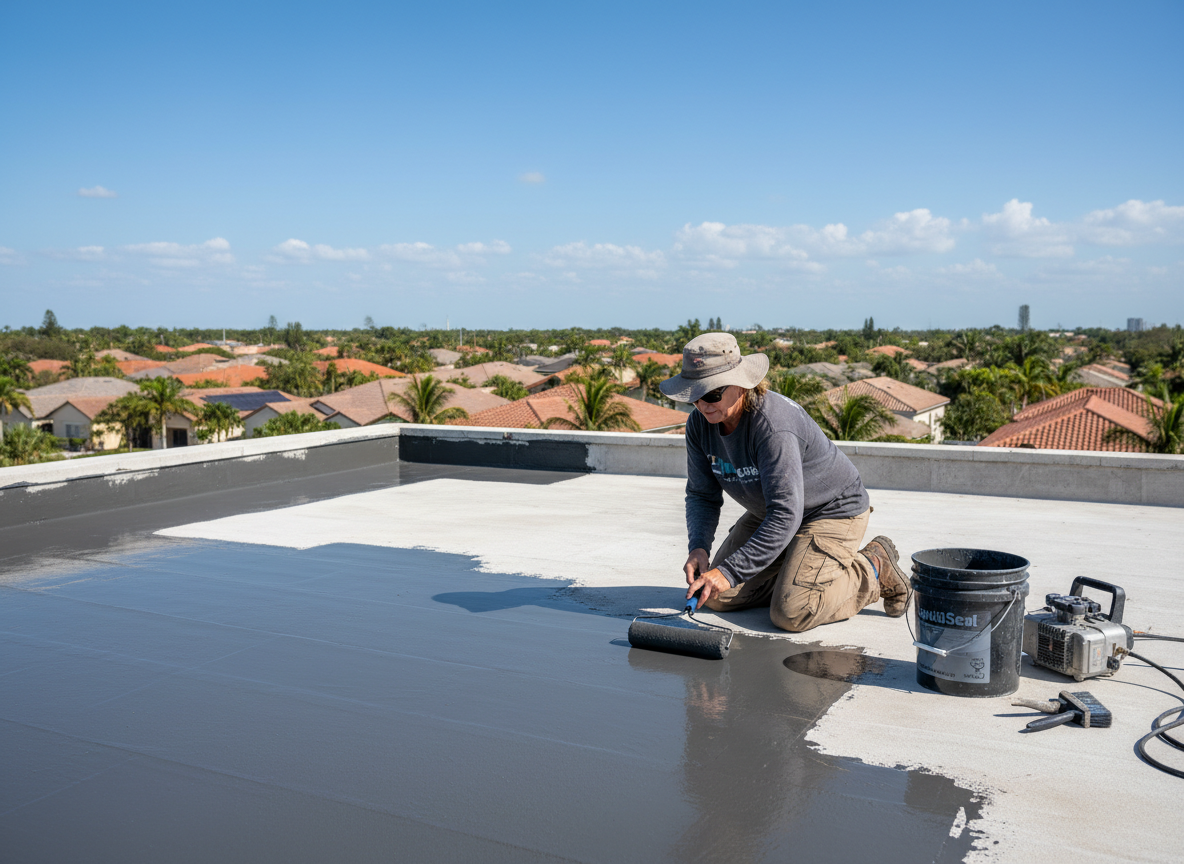
Cutler Bay homes built from the 1960s through the 1990s often feature concrete tile or low-slope sections that collect water during the intense afternoon thunderstorms typical from May through October. Waterproofing these roofs requires attention to the expansion joints and perimeter edges where wind-driven rain frequently penetrates older sealants. Without proper preparation, coatings fail within a few seasons because trapped moisture under the tiles expands and contracts with daily temperature swings.
The process starts with a thorough pressure wash and removal of failed caulk around vents, pipe boots, and skylights. Elastomeric acrylic or silicone coatings are then applied in multiple passes, paying special attention to the transition points between tile and flat sections that are common on Cutler Bay ranch-style houses. Edge cases include roofs near the canal system where standing water and occasional salt spray accelerate degradation of standard sealants, requiring a higher-build membrane system instead.
Homeowners sometimes attempt spot repairs with off-the-shelf products that do not match the thermal movement of the existing roof deck, leading to new leaks within one hurricane season. Proper waterproofing also includes checking for code-compliant flashing heights at walls and chimneys, which Miami-Dade County inspectors look for during any re-roofing or major repair work in the Cutler Bay area.
Technician insight
In Cutler Bay, the thing that catches most people out with roof waterproofing is how the constant high humidity and frequent heavy downpours exploit tiny gaps around tile ridges on 1970s and 1980s homes before the homeowner even notices interior stains.
Low-Slope Section Leak After Summer Storms
Water entered through a flat roof addition on a Cutler Bay home during repeated afternoon thunderstorms. Inspection showed cracked coating and clogged scuppers allowing ponding. The team cleaned the surface, installed new reinforced membrane at the edges, and applied a full-build coating system. The addition stayed dry through the rest of the wet season.
How it works
- 1
Roof Assessment
Inspect the entire surface for existing damage, ponding areas, and sealant condition while noting tile type and slope variations typical in Cutler Bay neighborhoods.
- 2
Surface Preparation
Remove loose debris, clean with low-pressure wash, and repair minor cracks or deteriorated underlayment before any coating application.
- 3
Detail Work
Reinforce all penetrations, valleys, and transitions with mesh tape and base coat to handle the expansion common during Florida's wet season.
- 4
Coating Application
Apply waterproof membrane in even coats, ensuring full coverage on both sloped tile sections and any adjoining low-slope areas.
- 5
Final Inspection
Check for uniform coverage and proper curing, then document the work for the homeowner's records.
Pricing
Pricing depends on roof size, pitch, and current condition; contact ApexMenders for an upfront quote after inspection.