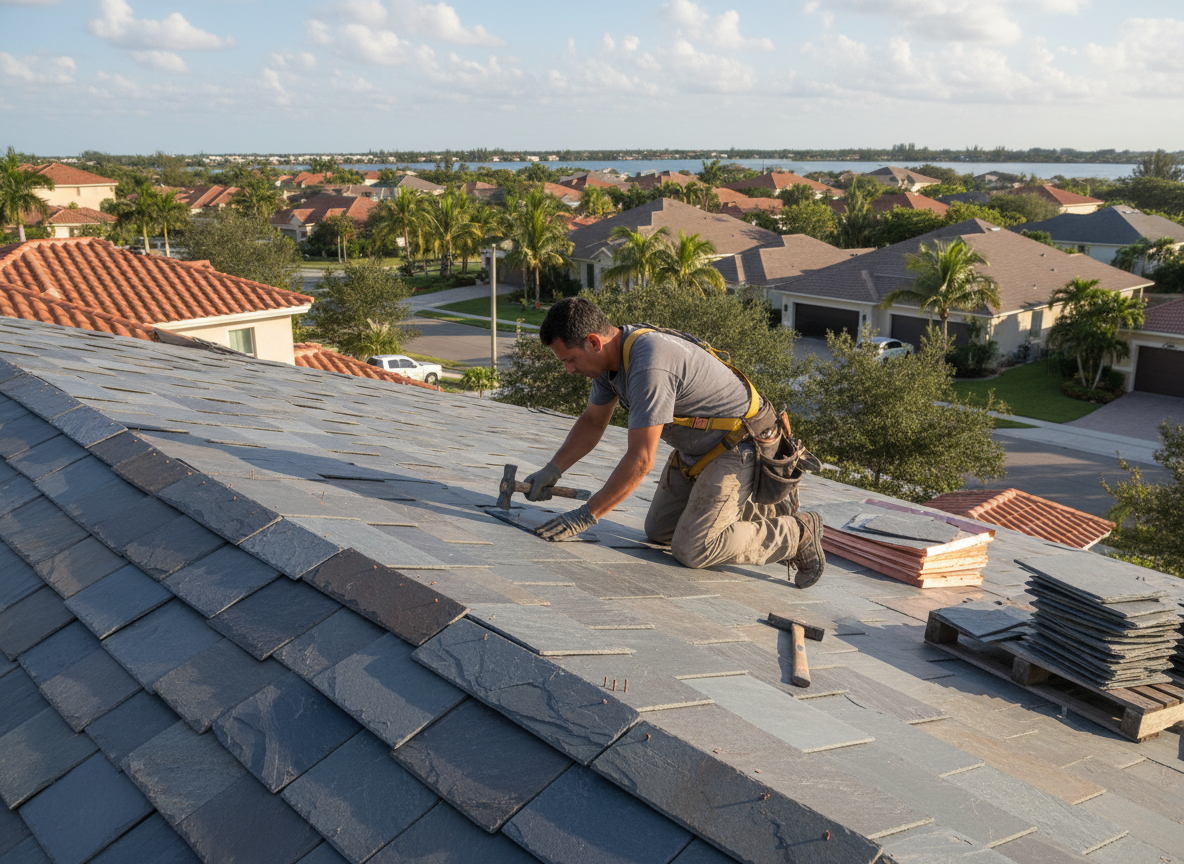
Slate roofing demands attention to structural load because the material is dense and heavy. Many homes in Cutler Bay date from the 1960s through 1980s and were framed for lighter asphalt shingles. Adding slate often requires checking rafter spacing and adding sistering or additional supports before work begins. Miami-Dade County wind-load requirements also mean every slate course must be fastened with corrosion-resistant hooks or nails rated for high-velocity hurricane zones. Skipping this step leads to uplift during summer storms that roll through the area each year.
Moisture management is the next critical factor. Cutler Bay sits in a subtropical zone with frequent afternoon downpours and high year-round humidity. Slate itself sheds water well, yet the underlayment and flashing details determine whether water reaches the deck. We use ice-and-water shield along eaves and valleys plus step flashing at every wall intersection. On older Cutler Ridge properties, rotted decking from previous leaks is common and must be replaced before new slate goes down or the job fails within a few seasons.
Edge details and ventilation finish the job. Ridge vents must be integrated without cutting through slate courses, and hip and ridge caps need to be mechanically fastened rather than just mortared. Homeowners in the Cutler Bay area often see granule loss or cracked slates after five to seven years when ventilation was inadequate. Proper soffit intake paired with ridge exhaust keeps the attic dry and extends slate life in this salt-air environment.
Technician insight
In Cutler Bay, the thing that catches most people out with Slate roofing is the combination of older 1970s rafter spacing and our constant humidity. If you do not add proper intake vents while the roof is open, the underlayment starts trapping moisture within two seasons and the slate starts working loose even though the material itself is fine.
Slate Replacement on 1978 Cutler Ridge Home
Homeowner noticed loose slates after a heavy spring storm. Inspection showed rotted decking and missing intake vents on a home built with 24-inch rafter spacing. We sistered several rafters, installed new ice-and-water shield, and laid new slate with code-rated hooks. The roof now passes current wind-load requirements and the attic stays dry during afternoon rains.
How it works
- 1
Site Assessment
We inspect the existing deck, rafters, and ventilation on site in Cutler Bay to confirm the structure can carry slate.
- 2
Material Selection
Homeowners choose slate color and thickness that meets Miami-Dade wind ratings while matching neighborhood aesthetics.
- 3
Deck Preparation
Damaged sheathing is replaced, new underlayment is installed, and all flashing points are addressed before slate arrives.
- 4
Slate Installation
Each course is laid with proper overlap and fastened per code, followed by ridge and edge detailing.
- 5
Final Walk-Through
We check every seam and fastener, then walk the homeowner through maintenance points before leaving the job.
Pricing
Cost depends on roof size, deck condition, and chosen slate thickness; we provide upfront quotes after inspection.