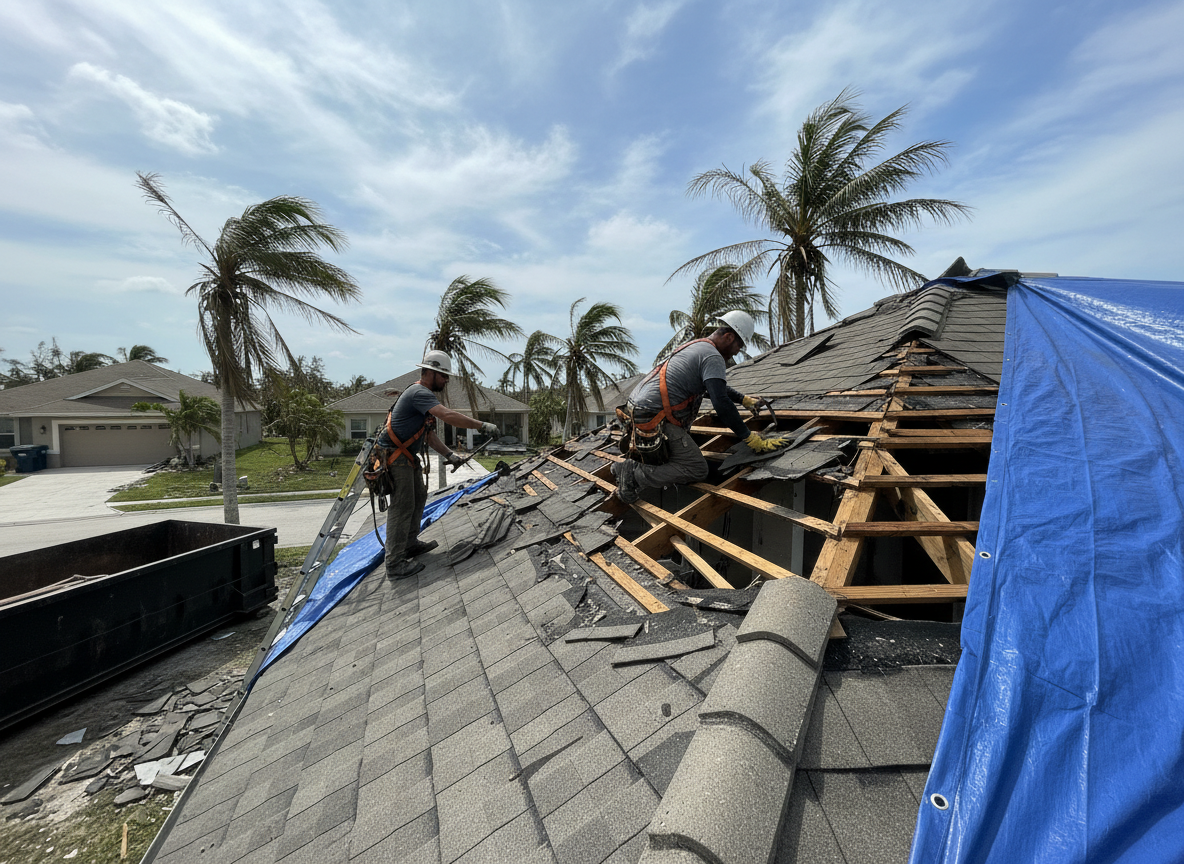
Cutler Bay roofs take direct hits from summer thunderstorms and occasional tropical systems that push wind-driven rain under tiles and flashings. Homes here often sit on older concrete-tile or asphalt-shingle systems installed decades ago, so a single high-wind event can lift edges, crack tiles, or tear membrane seams along valleys and ridges. We start every job by walking the entire surface and attic to map water intrusion points that may not show from the street.
Edge cases we see regularly include hidden deck rot along the south-facing eaves where afternoon storms concentrate and failed step flashing where stucco walls meet the roof. Miami-Dade wind-load requirements mean any replaced section must tie into existing straps and clips; skipping that detail leaves the repair vulnerable to the next front. We carry matching tile and shingle stock on the truck so we can restore the roof the same day when weather allows.
After securing the roof we photograph every compromised area and provide a written scope before any material is ordered. Homeowners in the area frequently discover that insurance adjusters miss secondary damage behind fascia boards or inside soffits, so we always open those spaces for inspection. Once repairs are finished we walk the homeowner through the work and leave a copy of the photos for their records.
Seasonal Storm Patterns in Cutler Bay
Cutler Bay experiences peak storm activity from June through October. Afternoon thunderstorms can dump several inches of rain in under an hour, testing every seam and penetration. We schedule follow-up visits after the first heavy rain to confirm no new leaks appear.
Technician insight
In Cutler Bay the thing that catches most people out with storm damage roof repair is hidden rot along the south eaves where afternoon storms hit hardest; older tile roofs from the 1980s and 90s often look fine from the street but the underlayment has already failed behind the fascia.
Post-Storm Leak on Old Tile Roof
Homeowner noticed water stains in a rear bedroom ceiling after a strong thunderstorm. We found lifted tiles and torn underlayment along the south valley. We replaced the damaged section, added new flashing, and secured the remaining tiles to current wind standards. No further leaks appeared after the next rain.
How it works
- 1
Initial Assessment
We arrive 24/7, document visible damage, and check attic spaces for active leaks.
- 2
Scope and Documentation
Detailed photos and written report prepared for homeowner and insurance if needed.
- 3
Temporary Securing
Tarps and fasteners applied to prevent further water entry until permanent repairs.
- 4
Permanent Repair
Replace or restore damaged sections using matching materials and proper wind-load attachments.
- 5
Final Walk-Through
Review completed work with homeowner and provide maintenance recommendations.
Pricing
Upfront quote provided after on-site inspection; final price depends on extent of hidden damage found.